
That damp, musty smell in your home—could it be mold in the carpet? Carpeting offers a cozy environment for mold, especially when wet. This post explores mold in carpets, helping you understand its causes, identify it, and learn what to do about it.
We’ll discuss effective cleaning methods and how to prevent mold growth. If you’re dealing with mold issues in Nashville, professional help is just a call away!
Our mold removal services are designed to tackle mold at its source, ensuring your home is safe, clean, and healthy.
Contact Tier Restoration today for expert mold removal in Nashville! Don’t let mold take over—get professional help now!
Mold in Carpet: Understanding the Causes
Mold thrives in damp, dark places, making carpets prime, especially with spills, leaks, or high indoor humidity. Mold spores, always present in the air, can settle and multiply on wet carpet padding in just 24 to 48 hours.
A humid climate or a damp basement with wall-to-wall carpeting can become a breeding ground for mold. Water-damaged carpet, especially with wet padding beneath, is particularly susceptible.
Recognizing Carpet Mold Growth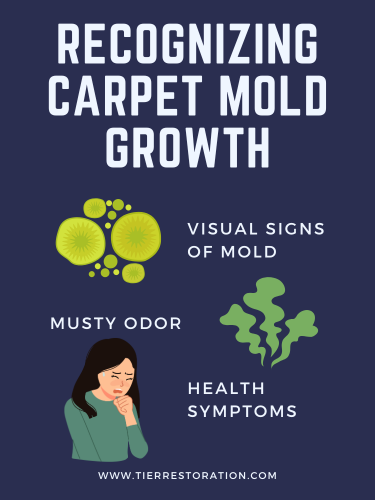
Apparent signs, like discolored patches (black, green, or white) and a musty odor, often indicate mold. Mold can hide beneath carpet fibers, so you might notice a persistent cough or allergy-like symptoms before seeing it.
Common signs of moldy carpets include a musty smell, discoloration, and visible mold growth. Allergies or respiratory issues can also be indicators of mold exposure.
Children in moldy homes face a 30 to 50% increased risk of developing asthma.
Tackling Mold: DIY Cleaning Methods
If you find mold early, DIY solutions can be effective. These can include white vinegar and water or hydrogen peroxide and water solutions.
Here’s how to tackle moldy carpets using hydrogen peroxide:
- Ventilate the area: Open windows.
- Gear up: Wear protective gear (mask, gloves), especially if you have mold allergies.
- Test the solution: Check for discoloration in a hidden spot.
- Prepare the carpet: Gently brush the affected area.
- Mix the Solution: Use a 3% hydrogen peroxide solution.
- Apply cautiously: Lightly dab it onto the affected area – avoid soaking.
- Wait: Leave for 10-15 minutes.
- Scrub gently: Loosen and blot the mold.
- Dry thoroughly: Use fans and a dehumidifier.
- Repeat if necessary: Some stubborn spots may need another cleaning.
- Professional help: For more significant mold problems, call a professional.
When Professional Help is Necessary
Extensive or profound mold growth may be too much to handle alone. Professional mold removal companies like Tier Restoration have the expertise and equipment to safely and effectively remove mold from carpeting and padding beneath carpets.
They can also prevent cross-contamination. Getting professional help is especially important for larger areas of mold damage or if the mold has penetrated building materials.
Preventing Mold: Keeping Your Carpets Clean and Fresh
Moisture control is key for mold prevention in carpets. This includes routine maintenance and keeping your carpet clean and dry to prevent mold spores from developing.
Running a dehumidifier, ensuring proper ventilation, and promptly cleaning up spills can help prevent the formation of damp environments where mold thrives. When replacing your carpet, consider using carpet padding with anti-microbial properties.
| Prevention Method | How It Helps |
|---|---|
| Regular vacuuming (1-2 times/week) | Removes dust and debris, which mold uses as a food source. |
| Prompt spill cleanup | Eliminate moisture to prevent water damage and so spores are less likely to thrive. |
| Dehumidifiers in damp spaces | Reduces excess moisture so mold form can’t grow. |
| Proper Ventilation | Good air circulation helps dry carpets and reduces mold-causing moisture. |
FAQs about mold in carpet
What kills mold on carpet?
White vinegar, baking soda, and hydrogen peroxide solutions can kill mold on carpets. However, for pervasive mold issues, professional cleaning is necessary to complete eradication and prevent mold from returning.
Removing mold yourself only addresses small areas of mold without eliminating mold.
Can you get sick from mold in carpet?
Yes, mold releases mVOCs (microbial volatile organic compounds) that produce musty odors. In individuals with mold allergies, allergic reactions like skin and eye irritation, coughing, and respiratory issues are common.
Inhaling mold can also cause more severe reactions, such as asthma attacks or mycotoxin poisoning. Mold exposure can even worsen asthma.
Is it safe to sleep in a room where the carpet has mold?
No, avoid sleeping in a room with moldy carpets. Mold spores, often invisible, pose health risks like mycotoxin poisoning and respiratory illnesses.
Breathing in airborne mold spores all night can aggravate allergy symptoms and cause coughing and sneezing. Obliterate the mold before returning to the room.
What are the signs of mold sickness?
Mold sickness symptoms often resemble a common cold, including sneezing, coughing, sore throat, watery eyes, and skin rashes. Breathing trouble worsens with mold exposure.
Mycotoxin poisoning from mold can also cause more serious health problems. If you notice these signs, conduct a mold test to detect mold and take steps to control moisture. Learn more about mold and its impact from the EPA.

Mold in Carpet: Protect Your Home and Health Today
Mold in carpets is a common issue, but understanding its causes and taking prompt action is crucial for preventing health problems and keeping carpets clean.
Address mold growth immediately to avoid further property damage and respiratory issues from inhaling mold.
Proactive maintenance, including controlling humidity levels, keeping carpets dry, and ensuring proper ventilation, is effective in preventing mold.
Be sure to dry any wet padding to prevent the growth and spread of mold and avoid further carpet risk.
Need help tackling mold in your carpet? Contact Tier Restoration for our professional mold removal services in Nashville today! Don’t wait—protect your health and home from mold’s dangers.